EasyJourney was a group project, developed in a team of five, as part of the ‘Innovation and Entrepreneurship’ module, part of the Design Engineering (MEng) course at Imperial College London. EasyJet and EasyGroup were not engaged in any consultancy or collaborative capacity with this project and the outcome is in no way endorsed by them. Any publicity is limited to personal and academic use.
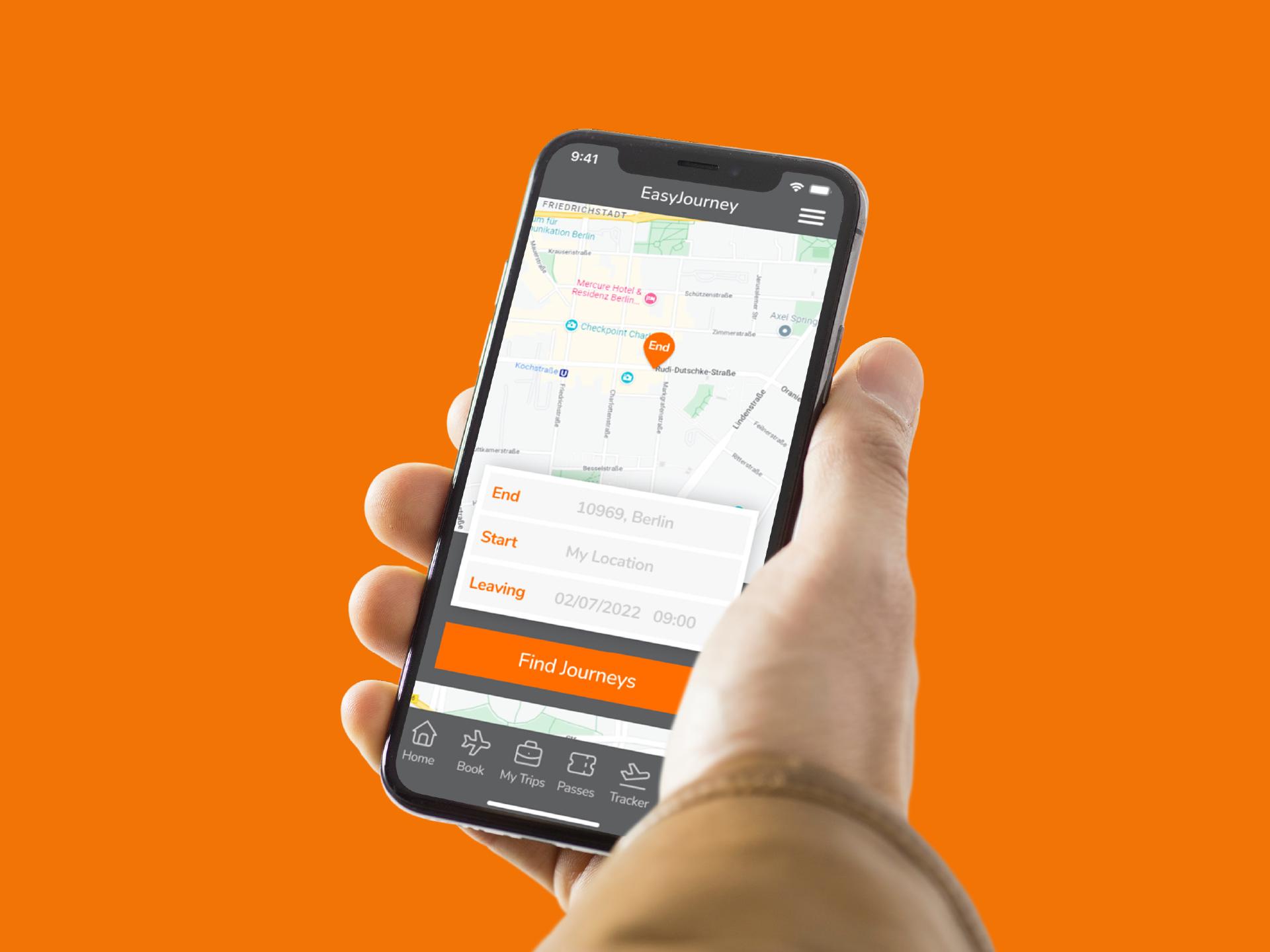
This project is proposal for a new easyJet service entitled ‘easyJourney’, to be integrated as a new feature on easyJet’s app. Targeting students and young adults, easyJourney allows customised booking. After inputting budget and preferences, easyJourney constructs multiple routes. These will include different means of transports to and from the airport, as well as hotels at the destination. This service improves booking time and gives a better overview of spendings.
The turnover for easyJet will be generated from attracting a new generation of young flyers accustomed to “one-click” app-based services. Online social media adverts and offline poster campaigns were selected for the marketing of the concept. The revenue for each channel was calculated and a financial model for the proposal was constructed.
Value Proposition — We help students and young adults quickly and conveniently arrange European travel with a centralised one-click mobile booking system.
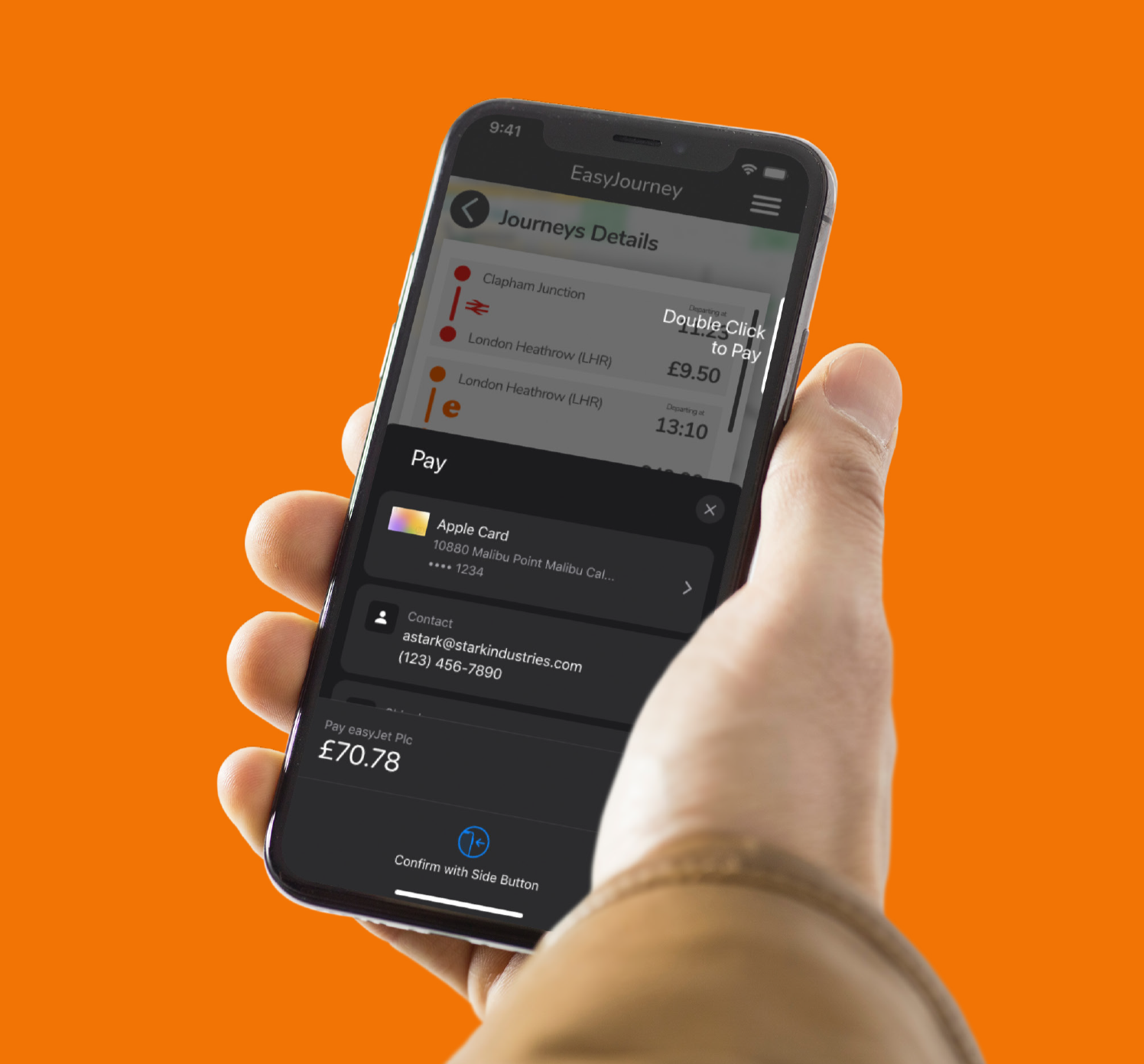 App mockup showing a user paying an EasyJourney trip in one click
Project details
Development process
The project began with identifying a gap in the market, particularly targeting younger travelers who prioritize convenience and budget when booking trips. Through extensive surveys and interviews, the pain points of the current travel experience were mapped. The concept of EasyJourney was refined to offer end-to-end travel solutions, combining data-driven insights with an intuitive user interface. Development focused on seamless integration with easyJet’s existing app, relying on AI to offer personalized routes and real-time updates.
Market research and strategy
To guide the direction of EasyJourney, the team carried out detailed market research targeting students and young adults. It was found that this demographic makes up a significant portion of easyJet’s user base, with 31% of UK travelers being between 16 and 35 years old. Based on survey data, respondents highlighted that their biggest frustration with travelling was managing different booking components, especially for airport transfers. In response, the project developed a central system to consolidate all travel bookings into one platform, reducing the hassle of managing multiple services. This focus on convenience is in line with the trend toward personalized, app-based travel solutions. Projections showed that the service could achieve first-year revenue of £1.5 million, growing substantially as the service expanded into new regions
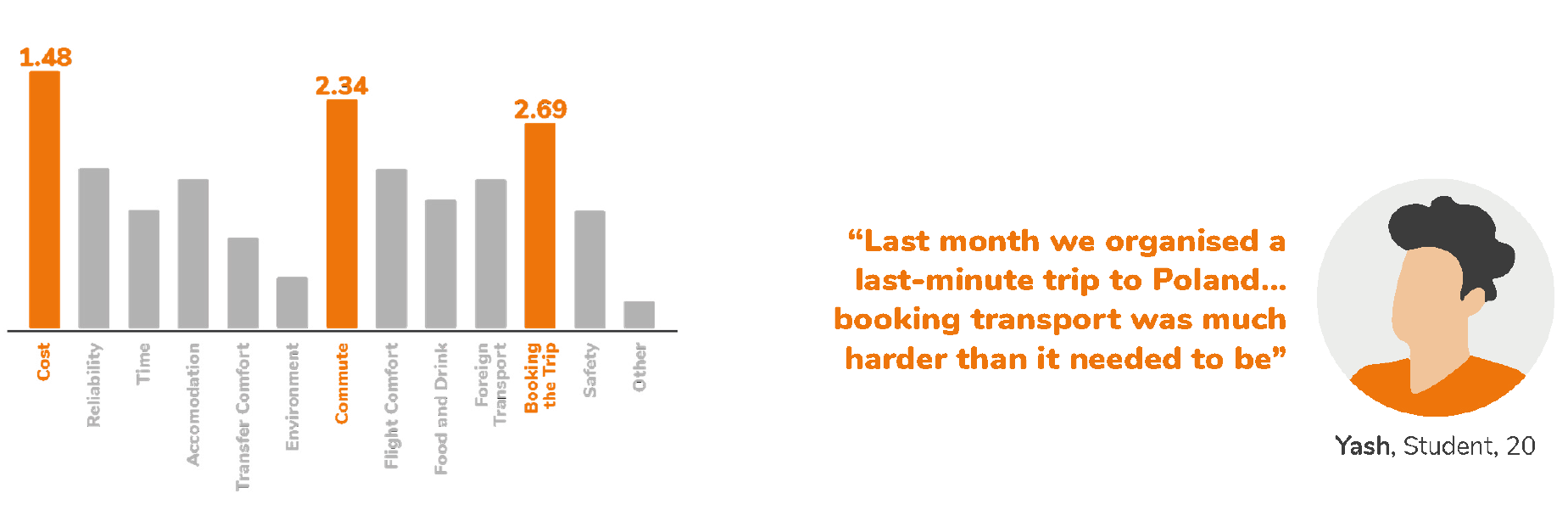 Insights from student respondees ranking the most frustrating aspects of a journey and an interview
Product development and UX design
The project team designed EasyJourney’s user interface with simplicity and flexibility in mind. Based on user feedback, the service was designed to provide quick, customizable routes. Users could input their budget and preferences, and the system would generate multiple travel options, allowing them to make adjustments if necessary. For example, users could opt for cheaper transport options, such as switching from a car pick-up to an easyBus. The AI-driven system used easyJet’s vast data resources (300 million annual website visits) to tailor itineraries to individual needs, ensuring the best possible balance between cost, convenience, and environmental impact. The development team ensured that the service would update in real time, so if a flight was delayed, other parts of the trip, like transfers, would automatically adjust
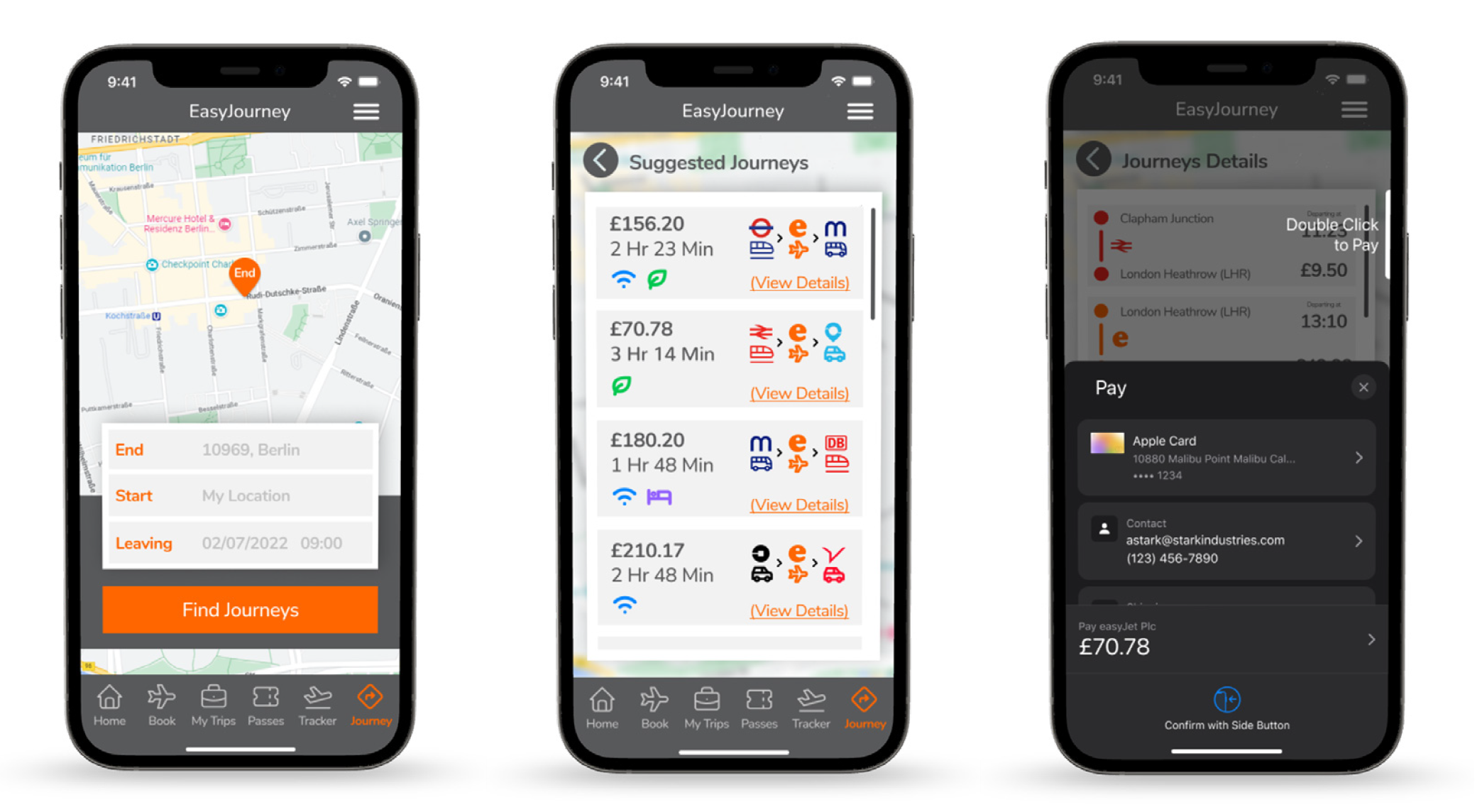 App Mockups of the Proposed easyJet App Addition
Financial projections
Financial analysis played a crucial role in determining the feasibility and scalability of EasyJourney. The projections indicated that the service would break even within two years of launch, with expected first-year revenues of £1.5 million and third-year revenues reaching £21 million. Key expenses were focused on marketing and staff salaries, with initial development costs estimated at £250,000 for outsourced mobile app development. The service’s profitability was linked to its ability to scale efficiently across different regions, with revenue increasing as more cities were added to the network. In the first three years, EasyJourney’s cumulative net income was expected to reach significant levels as it captured a growing market of young travelers
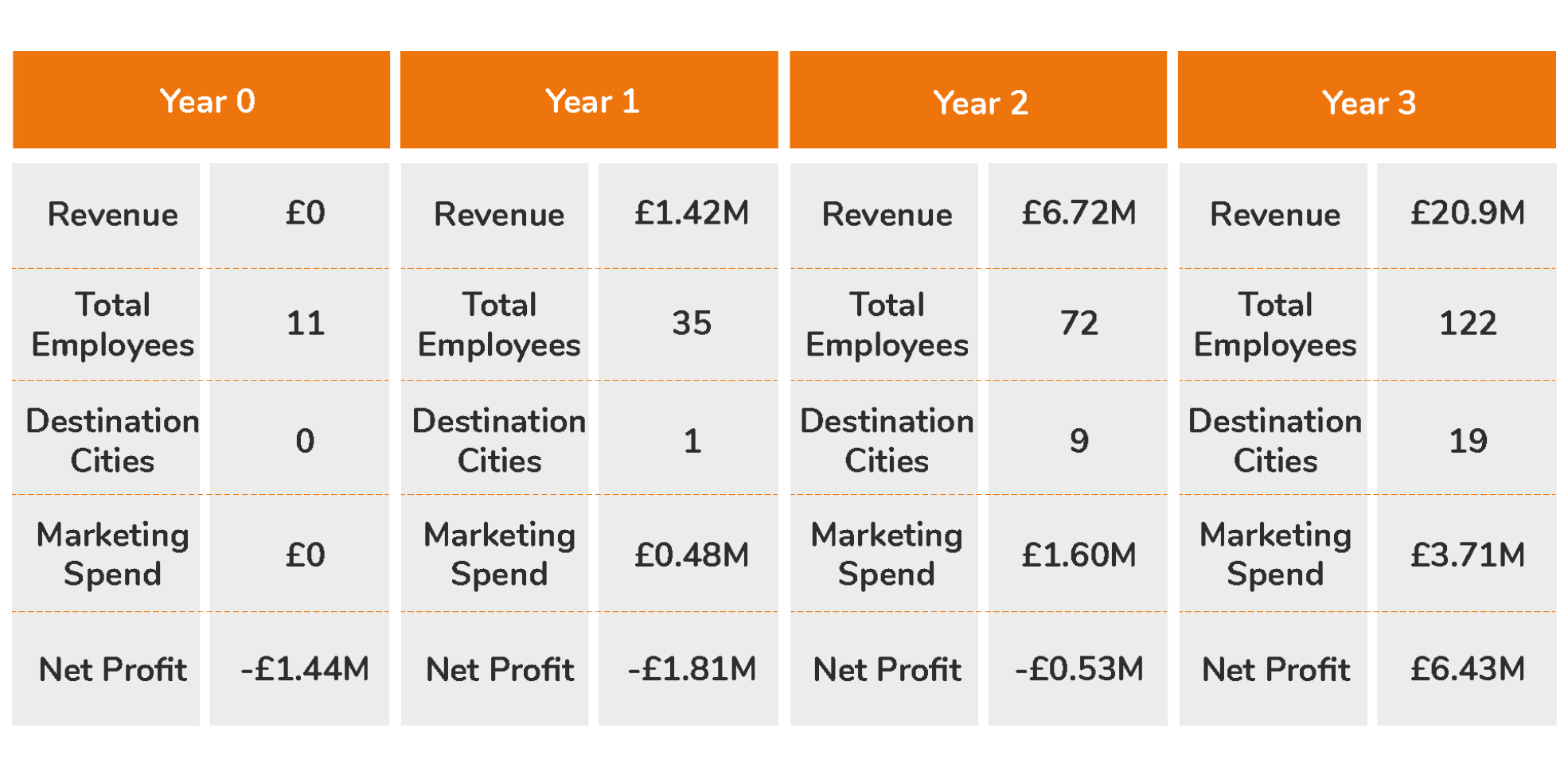 Summary of financial projections
Marketing
The marketing strategy for EasyJourney was designed to target young travelers, with a strong focus on digital and social media advertising. An online marketing budget of £310,000 was allocated for the first year, with campaigns running on Instagram, Facebook, TikTok, and YouTube. These platforms were selected based on user behavior, as research showed that young adults spend an average of over three hours per day on social media. The project anticipated a high conversion rate, especially through “inorganic content marketing” strategies, where travel recommendations would link directly to EasyJourney’s booking system. In addition to online efforts, an offline campaign was planned for the London Underground, which could reach an estimated 1.7 million people per month. This dual-channel approach was designed to maximize exposure, with the goal of capturing 310,000 clicks in the first year.
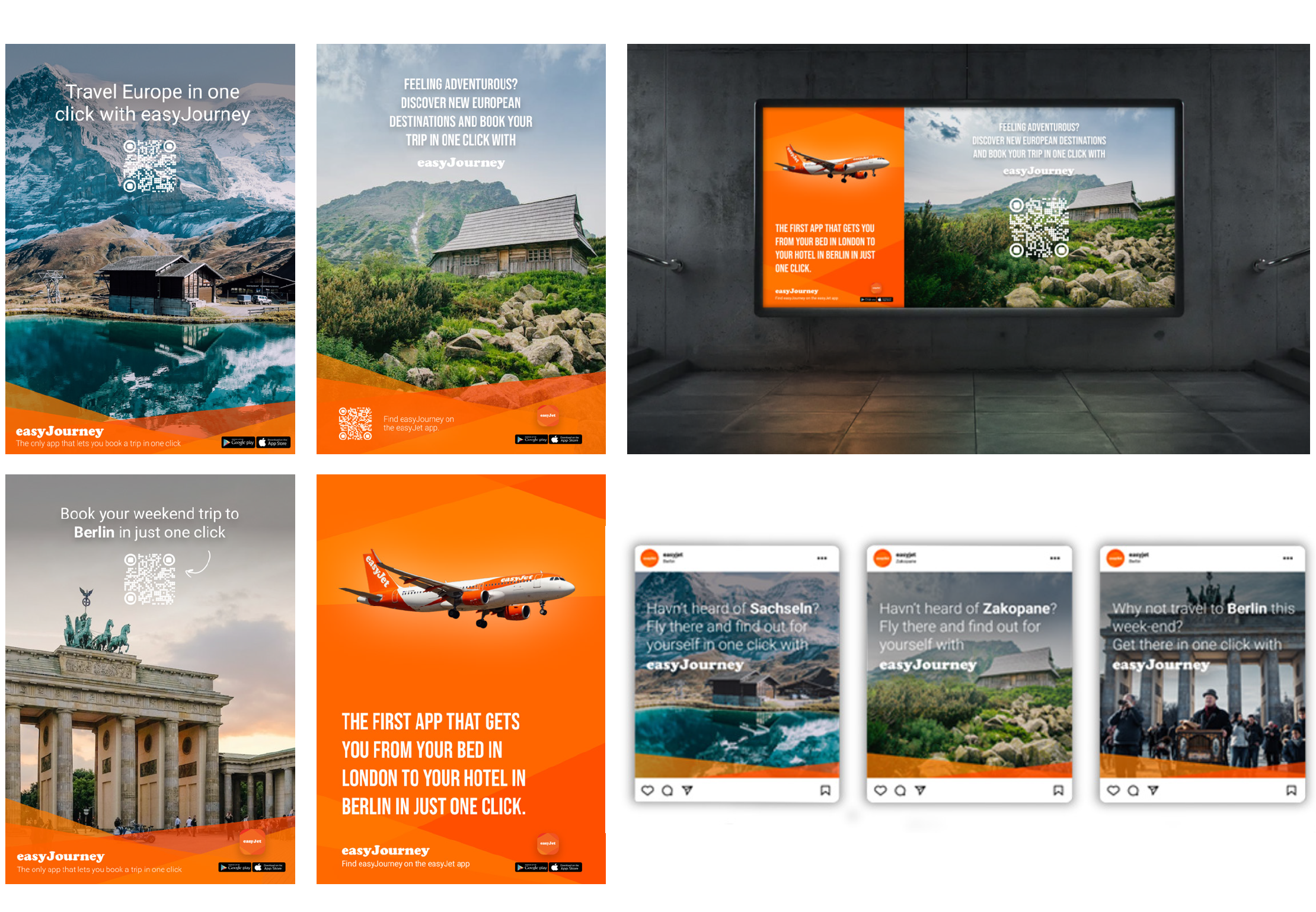 Mockups of the proposed marketing campaigns
Partnership development
To ensure the seamless integration of all travel components, the team focused on building strategic partnerships with transportation providers. For the pilot launch in Berlin, partnerships would be established with Deutsche Bahn and ViaVan, allowing easyJet to offer an all-in-one booking experience, covering flights, public transport, and ridesharing options. These partnerships would be key to the success of EasyJourney, ensuring that users could manage their entire journey through the app. Berlin was chosen as the initial market due to easyJet’s existing strong presence in the city, with over 50 million passengers served since 2004. The project also took advantage of the Berlin Open Data Portal, which provides real-time transport scheduling data, essential for creating dynamic, adaptable itineraries. Expansion plans were designed to leverage similar partnerships in other European cities, ensuring continued growth.