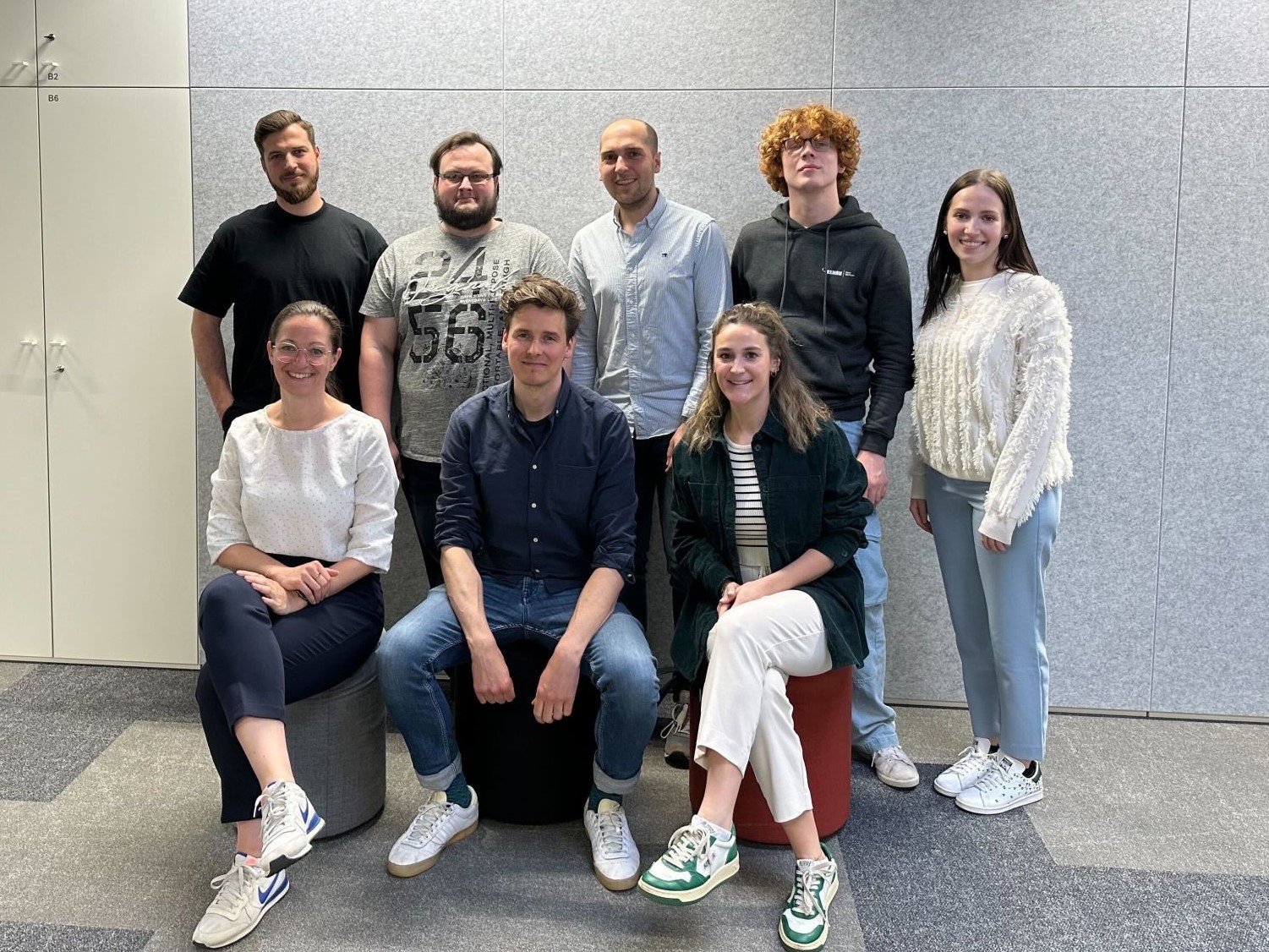
In 2023 I completed a 6 month industrial placement at REHAU New Ventures (NV), the corporate venture builder of the REHAU Group. For this, I temporarily relocated to Germany, working out of their Erlangen office. Meetings and casual conversation was done in German, whereas formal deliverables were completed in English.
During the industrial placement, my role was within the Better Living team, which focuses on identifying customer problems and creating solutions that make daily life easier, healthier, and more enjoyable. NV’s approach involves exploring innovation opportunities across various sectors, ranging from health to home and work, with an emphasis on early-stage ideation and development. Throughout my placement, I was involved in several core projects, gaining experience in business model development, market analysis, and ideation processes, all while contributing to NV’s mission of enhancing people’s lives.
Key tasks and skills
Business model development
One of my primary responsibilities was developing business models for early-stage innovation projects. I collaborated with my team to create scalable business models that addressed specific user needs. This included defining pricing strategies, identifying target user groups, and aligning the model with NV’s venture-building process. The business models we developed played a key role in validating the commercial potential of these projects, enabling them to progress through the firm’s innovation funnel.
Market sizing and analysis
In addition to business model development, I conducted comprehensive market sizing to estimate the market potential of the projects I worked on. I calculated TAM, SAM, and SOM, which allowed my team to evaluate the scale and feasibility of each venture. These data-driven insights were critical in determining whether the projects could be commercially viable. I applied these market analysis techniques across several fields, including health and home improvement, ensuring that the ventures aligned with market demands.
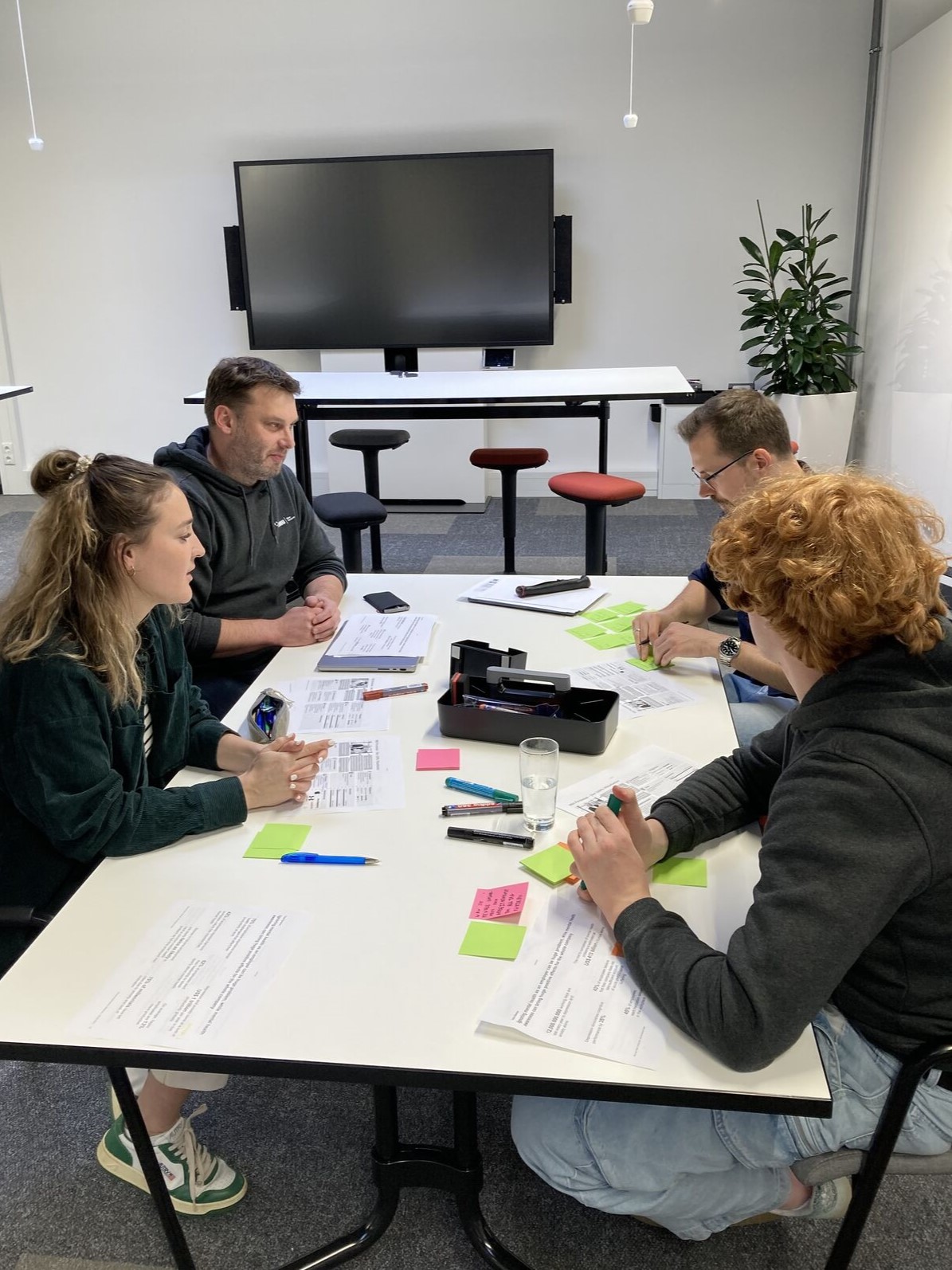 Ideation workshop on the Therabuddy project
Hypothesis testing and validation
A key aspect of my role involved hypothesis testing and validation. I designed and implemented quantitative surveys to test the underlying assumptions of our projects, ensuring that they accurately addressed real user pain points. I also conducted qualitative interviews to gather deeper insights into user needs. These research efforts allowed us to validate key hypotheses, ensuring that the solutions we were developing were both relevant and effective in solving the identified problems. The results of this research were crucial in advancing the projects through NV’s innovation funnel.
Design Thinking and Ideation
I played an active role in NV’s ideation workshops, which focused on generating new venture ideas within the Self-Optimisation and Furniture & Storage fields. I worked closely with my colleagues to prepare workshop materials, develop user personas, and lead brainstorming sessions. By empathizing with users and identifying their pain points, we were able to generate innovative solutions that could potentially be developed into full-fledged ventures. After the workshops, I contributed to refining the top ideas, evaluating their feasibility, and conducting competitor analysis to ensure they had a strong market fit.
Quantitative and qualitative research
I gained extensive experience conducting both quantitative and qualitative research throughout my placement. In addition to the surveys and interviews I designed, I conducted deep dives into subsectors within the Self-Optimisation and Furniture & Storage fields. This research involved analysing market trends, understanding customer pain points, and identifying emerging opportunities. The insights gathered from this research informed our ideation sessions and helped guide post-ideation evaluations, ensuring that the ventures we pursued were grounded in a strong understanding of the market and user needs.
Agile project management
During my placement, I operated in a dynamic agile environment, utilizing Agile methodologies to manage projects effectively. We conducted daily stand-up meetings and sprint planning sessions, prioritizing tasks in our sprint backlogs. I took ownership of various user stories and tickets, ensuring timely completion for sprint reviews. Our emphasis on continuous delivery and incremental development allowed us to adapt based on feedback gathered during retrospectives. By using tools like Kanban boards and Jira for task tracking, I contributed to the team’s velocity and overall project success.